Installing Designer Grasscloth, Scalamandré & Murals on Historic Plaster: The North Jersey Homeowner’s Guide
# Installing Designer Grasscloth, Scalamandré & Murals on Historic Plaster: The North Jersey Homeowner’s Guide
Installing designer wallcoverings such as natural grasscloth, Scalamandré handprints, and scenic panoramic murals over historic plaster requires specialized skimming, high-solids vapor-permeable priming, and rigorous moisture calibration. In North Jersey's pre-war and turn-of-the-century estates, direct application without meticulous wall preparation inevitably causes substrate shearing, seam separation, telegraphing, and adhesive failure.
Historic plaster is a living, breathing substrate. Across historic communities throughout Essex County—from the sprawling center-hall Colonials in Montclair and Glen Ridge to the Victorian architecture of Short Hills—walls constructed between the late 19th and mid-20th centuries possess unique structural characteristics. Unlike modern uniform gypsum drywall, traditional lath-and-plaster assemblies expand, contract, absorb ambient moisture, and settle unevenly over generations.
Mass-market retail advice from direct-to-consumer wallpaper purveyors often assumes flat, inert, climate-controlled drywall. When discerning homeowners purchase thousands of dollars of artisan textiles, hand-painted scenic panels, or heavy botanical prints, treating antique plaster like modern construction produces catastrophic results. At NJWallStory, headquartered in Clifton NJ, our artisan approach bridges century-old architectural integrity with contemporary, high-precision installation standards.
The Structural Realities of Century-Old Walls
### The Unique Chemistry and Physics of North Jersey Historic Plaster
Antique walls constructed from lime, sand, horsehair, and three-coat gypsum plaster present distinct environmental dynamics that directly challenge luxury adhesives:
* Substrate Porosity Variations: Old plaster features irregular density. Raw lime pockets draw water out of wallpaper paste instantly, leading to "starved" glue joints where edges curl, whereas dense calcified areas repel moisture entirely. * Calcimine Residue and Historical Paint Layers: Many pre-1940 residences in Bergen County and Morris County harbor latent coats of chalky calcimine paint beneath decades of oil or latex finishes. Standard water-based adhesives reactivate these unstable bases, causing your bespoke wallcovering to pull the plaster's top layer clean off the lath. * Micro-Fissures and Settlement Hairlines: Seasonal expansion shifts plaster keys against wood laths. Subtle seasonal movement telegraphs straight through fine silks, paper-backed linens, and fine-woven non-wovens if the substrate lacks structural reinforcement. * Vapor Transmission and Humidity Gaps: Historic masonry exterior walls lack integrated modern vapor barriers. When ambient indoor humidity fluctuates across New Jersey seasons, moisture moves outward through the plaster, creating bubbling beneath impermeable wallcoverings.
Treating these complex surfaces demands comprehensive stabilization rather than superficial patching. When investing in statement patterns from iconic design houses, substrate engineering is ninety percent of the finished aesthetic.
The Architectural Protocol for Substrate Preparation
### Substrate Stabilization: Skimming, Priming, and Lining
Achieving museum-grade hanging quality on heritage plaster demands a multi-phase preparatory protocol:
1. Acoustic & Structural Integrity Sounding: Every square foot of plaster is mechanically audited. Loose plaster keys detached from the wooden lath are re-anchored using specialized architectural plaster washers and flexible structural adhesives rather than rigid screws that shatter the brittle core. 2. Calcimine & Lead Sealing: Suspect paint strata are sealed with penetrating, low-odor, alcohol- or oil-based blocking primers. This critical step locks down powdery historical films, creating a permanent moisture barrier that prevents adhesive water from destabilizing underlying coats. 3. Level 5 Skim Coating: Uneven walls receive multiple ultra-thin passes of setting-type compounding compound, followed by polymer-modified finishing coats. This fills historic hollows, erases deep trowel waves, and yields a plumb, monolithic plane. 4. Architectural Non-Woven Bridging Liners: For expansive historical dining rooms and stair halls in Union County or Passaic County, installing a heavy-grade blank stock lining paper cross-grain before hanging the final decorative paper absorbs micro-stresses and bridges dormant settling cracks. 5. Pigmented Acrylic Wallcovering Primer: The final preparatory layer is an opaque, high-solids, vapor-permeable sizing primer (such as Roman PRO-977 Ultra Prime or equivalent premium acrylic). This creates uniform porosity, perfect wet-tack open time, and guarantees that when you redecorate in future years, delicate plaster remains unmarred.
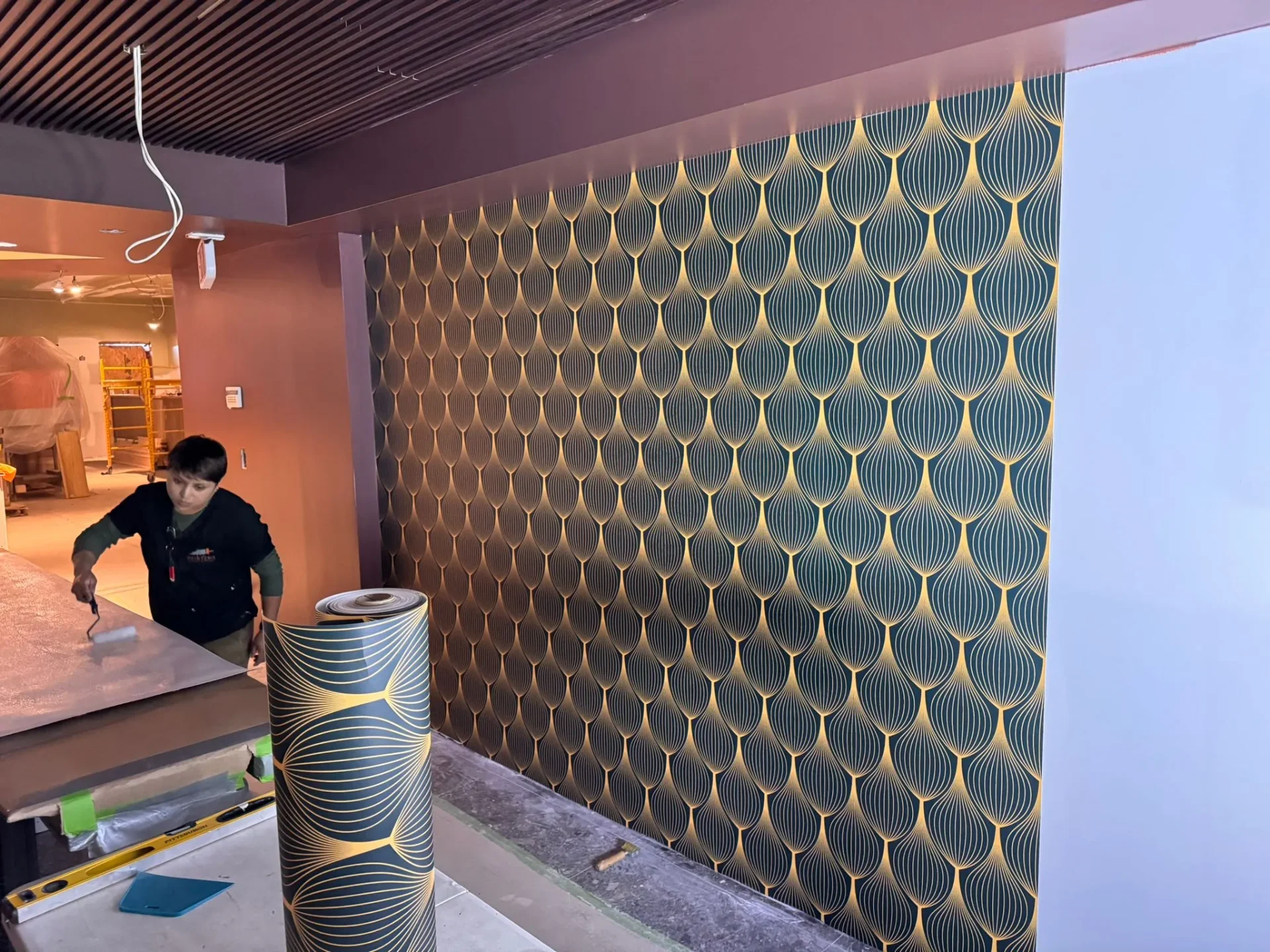
Explore our dedicated wallpaper installation gallery to see how bespoke planning ensures immaculate results for hand-blocked wallpapers and fragile botanical fibers.
Material-Specific Challenges: Grasscloth, Silks, and Panoramic Murals
### Luxury Wallcovering Demands: Grasscloth, Scalamandré & Scenic Murals
Different luxury materials present unique installation tolerances when paired with seasoned plaster:
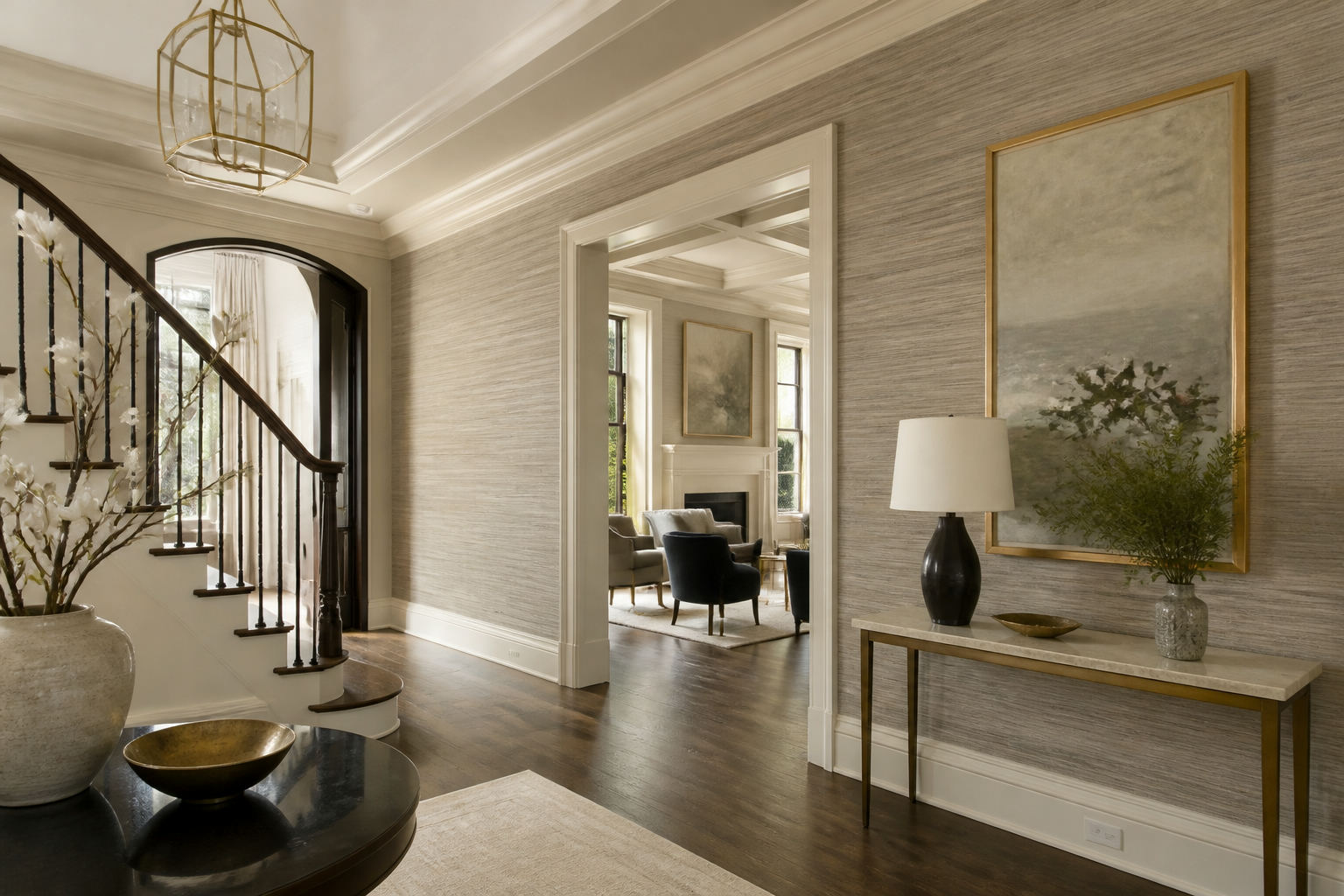
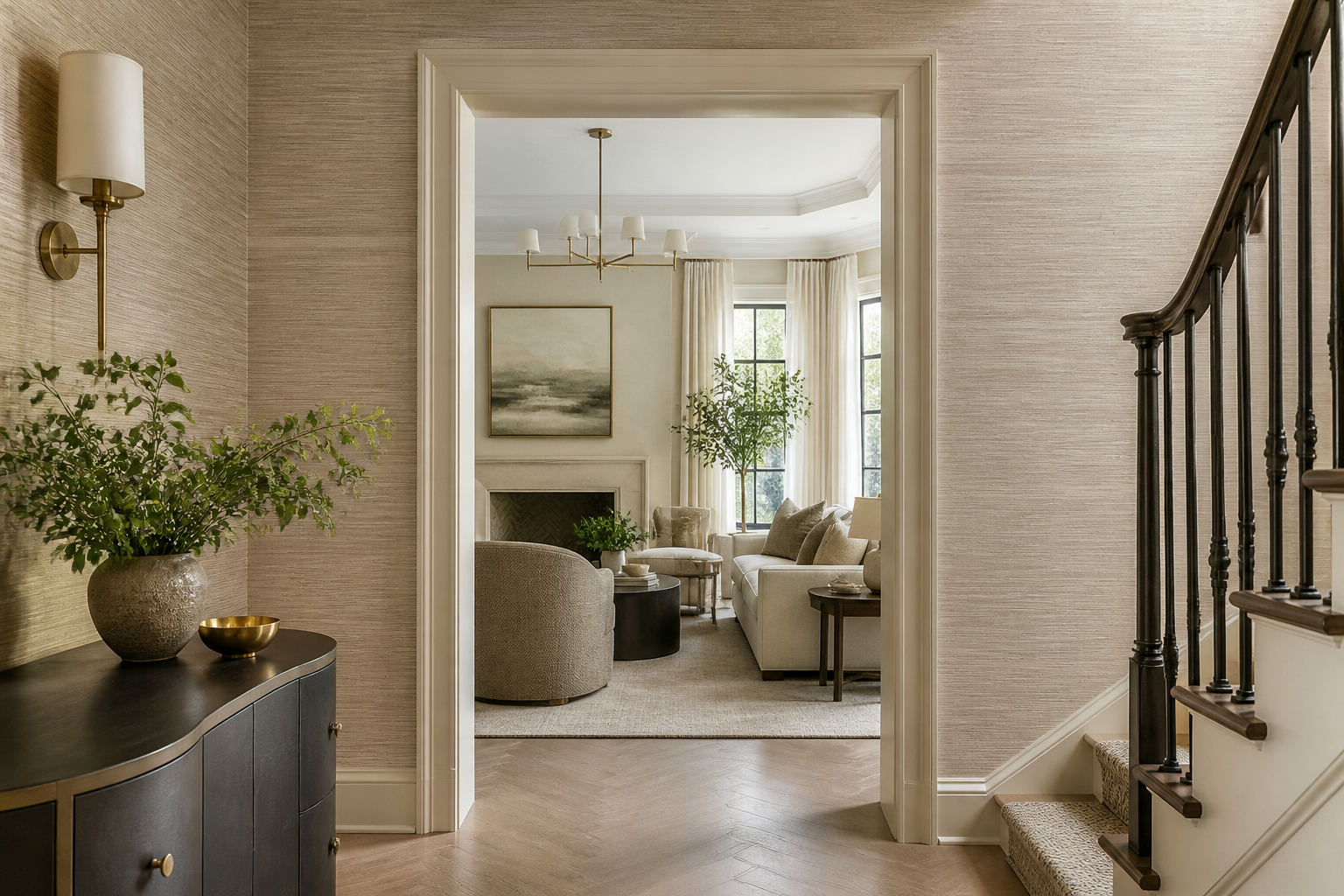
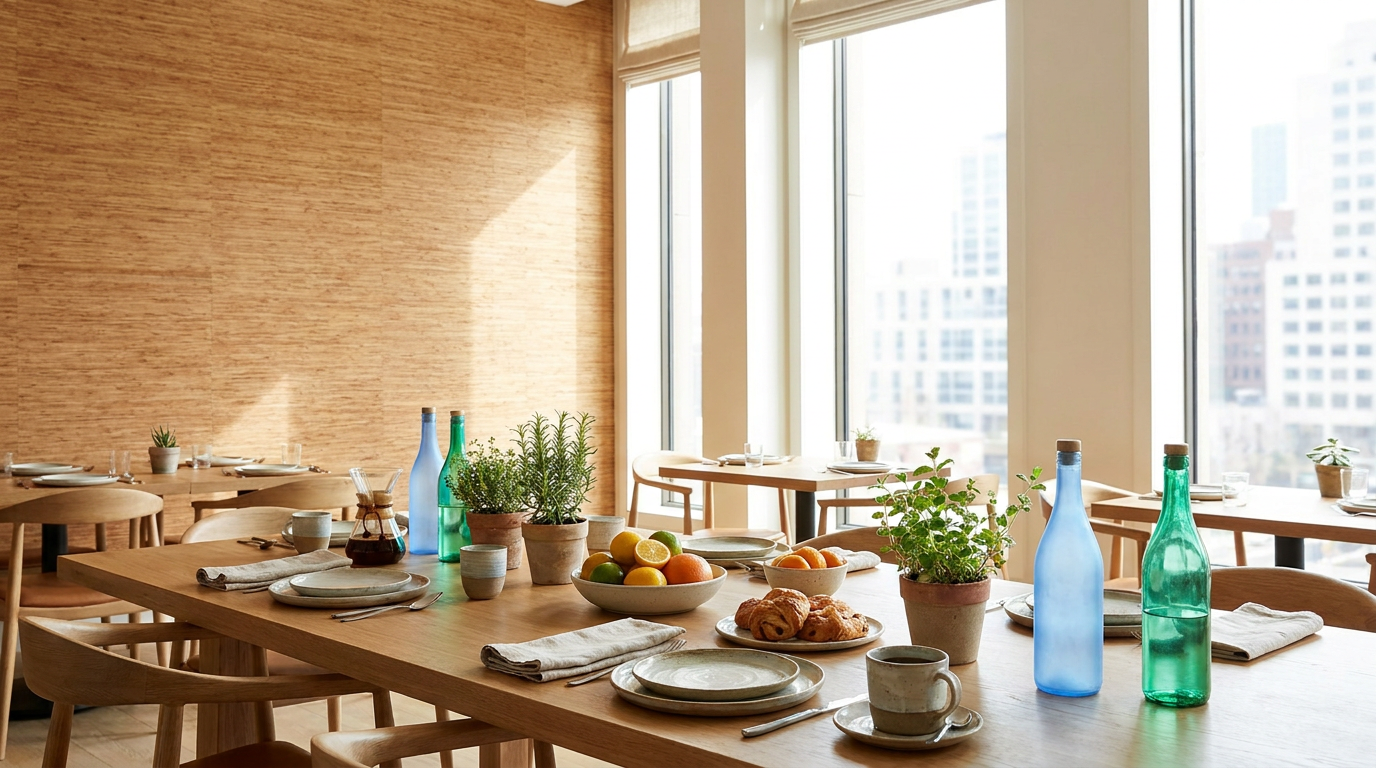
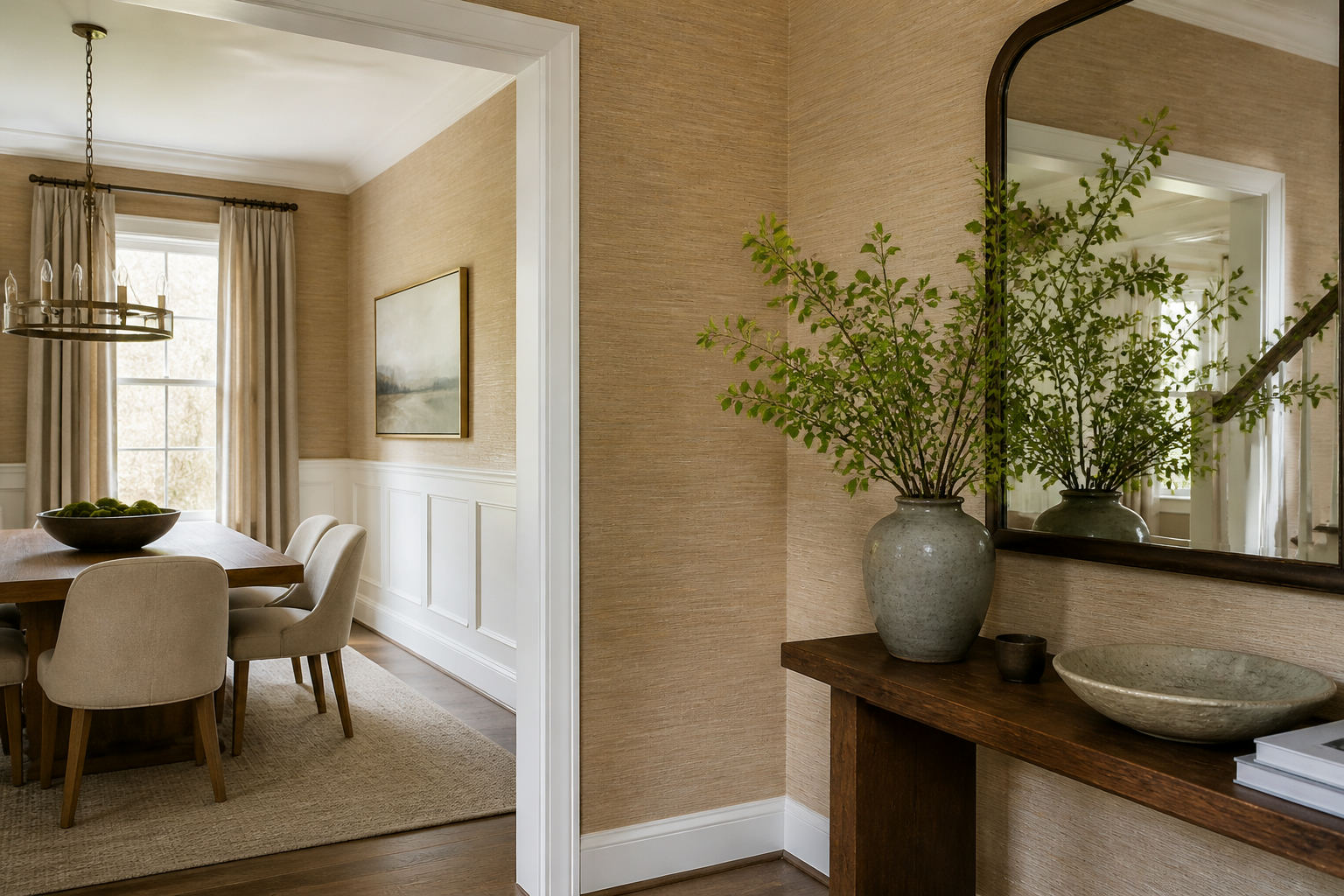
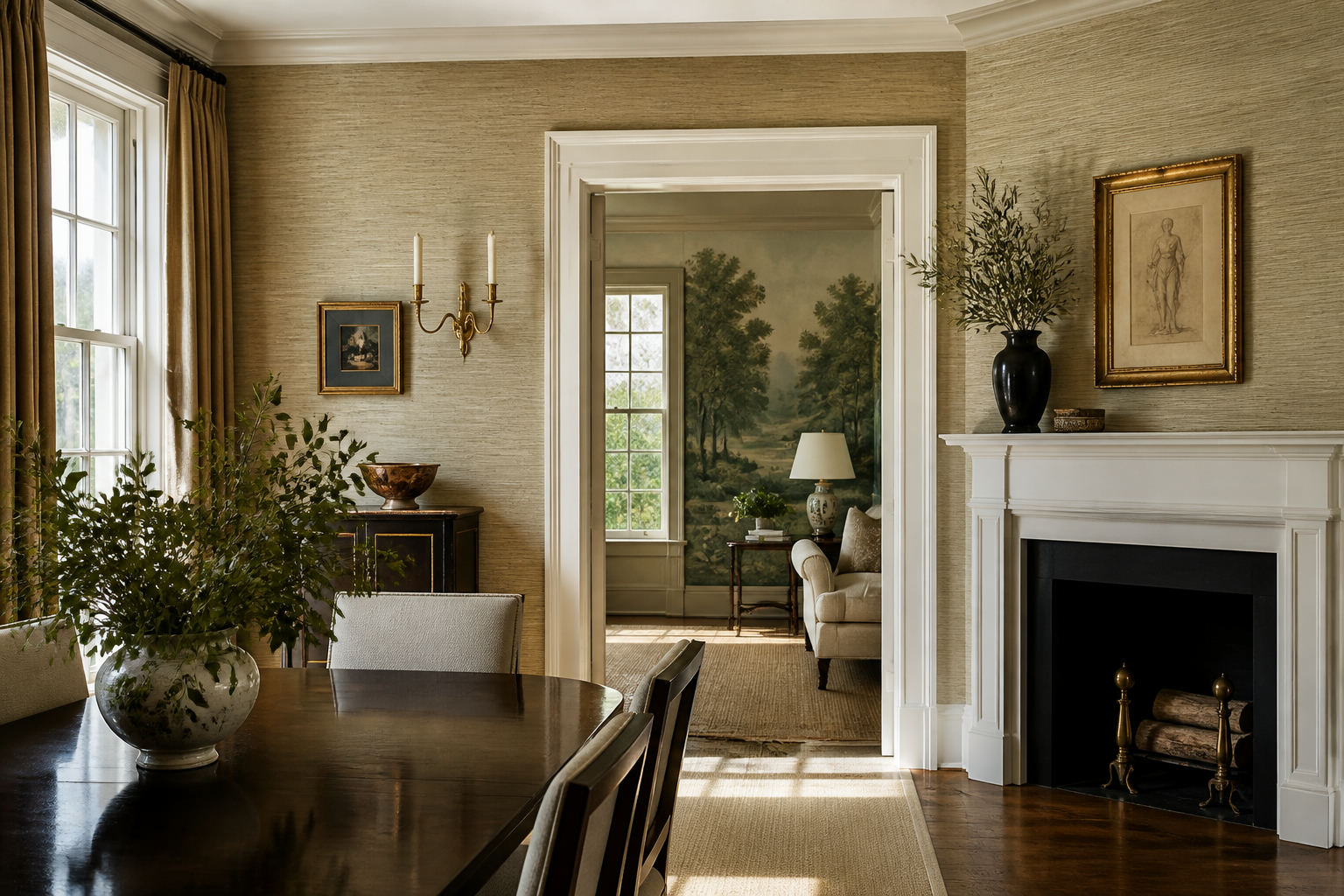
#### Natural Grasscloth and Woven Textures Authentic sisal, raffia, seagrass, and jute expand when wet and contract as they cure. Because natural fibers exhibit organic shade variances (panelling), seams cannot be double-cut carelessly. On uneven plaster, seams will open if the wall pulls moisture out of the adhesive before the fiber relaxes. Booking times must be calibrated down to the minute, and clear specialty wheat or clay adhesives must never brush the face of the fiber, as water spots leave permanent mineral blemishes.
#### Scalamandré Silks, Damasks, and Handprints Scalamandré’s legendary patterns—such as the iconic Zebras or historic floral damasks—demand micrometer-level seam alignment across vast sightlines. Traditional plaster walls are rarely plumb or square. Compensating for historic ceiling sag or settling doorways requires calculating intentional run-offs, laser-plumbing every drop, and dry-trimming selvage edges by hand using fresh surgical carbon blades on every single slice.
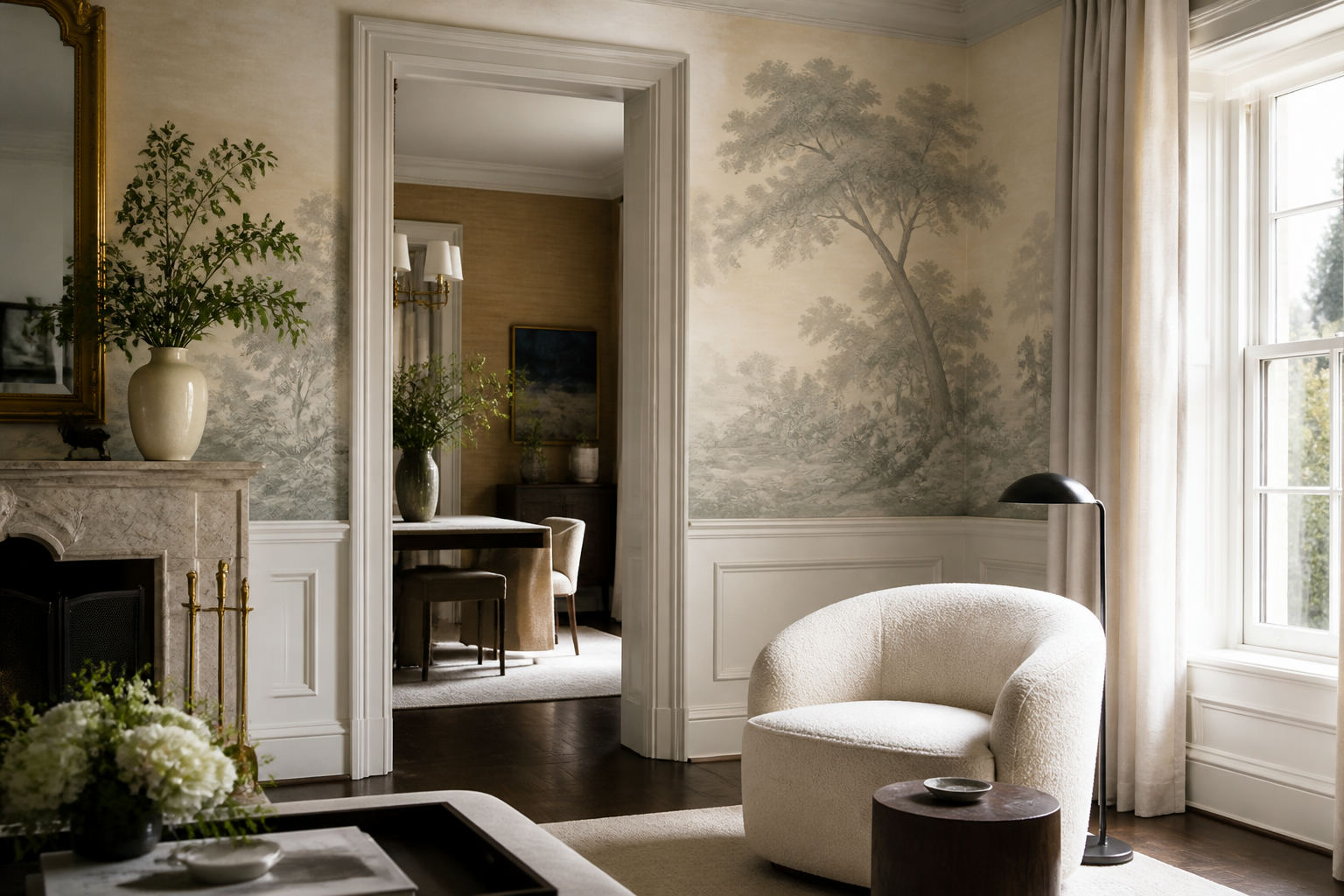
#### Bespoke Panoramic Murals (Zuber, de Gournay, Gracie) Scenic continuous murals represent the pinnacle of interior decorative art. Unlike repetitive pattern drops, a bespoke scenic panoramic mural cannot tolerate wall distortion. An uncorrected bulge in the plaster will distort perspective sightlines, cause facial features or architectural columns in the artwork to shear, and leave visible puckering. Our interior painting and surface restoration craftsmen ensure background walls achieve zero-tolerance flatness before these irreplaceable panels touch the wall.
Can you install luxury wallpaper directly over bare or patched historic plaster?
Never apply high-end designer wallcoverings directly over unprimed, repaired plaster. Fresh plaster and patching compounds are chemically hot (highly alkaline) and excessively porous. They pull water immediately from wallpaper paste, causing adhesive failure, edge curling, and chemical burning of natural dyes. Plaster must always be cured, skim-coated, and sealed with a dedicated, high-solids acrylic wallpaper primer.
Can you hang wallpaper over cracked historic plaster?
Yes, but only after proper structural stabilization. For minor stable settling cracks, elastic bridging compounds and a non-woven cross-lined blank stock paper provide an immaculate barrier. Active or structural cracks require re-pinning loose plaster keys to the wood lath with architectural anchors prior to skim-coating, ensuring movement never telegraphs through delicate silks or grasscloth.
Is grasscloth suitable for historic powder rooms and bathrooms?
Natural grasscloth is porous, moisture-reactive, and lacks protective synthetic coatings. In older New Jersey homes without modern climate control, bathroom humidity causes natural grasscloth to absorb vapor, loosen from the substrate, and cultivate mildew behind the seams. For powder rooms with proper ventilation, it is viable; for full bathrooms with high-volume showers, we advise moisture-resistant designer vinyl alternatives or isolating grasscloth to low-humidity suites.
How do boutique brands like Scalamandré differ from direct-to-consumer wallpapers?
DTC brands like Spoonflower and Tempaper produce casual, self-adhesive or pre-pasted materials engineered for contemporary, dead-flat drywall. Scalamandré, Zuber, and designer grasscloth are unpasted, artisanal materials woven from natural fibers or printed on delicate paper substrates. They require precision hand-trimming of selvages, exact paste formulation, custom booking times, and museum-grade substrate leveling.
Elevate Your Historic North Jersey Estate
Entrust your heritage home to the master wallcovering artisans at NJWallStory. Based in Clifton, NJ, we serve discerning homeowners throughout Bergen, Essex, Morris, Union, Hudson, and Passaic Counties with uncompromising craftsmanship.
Request a Design Consultation